

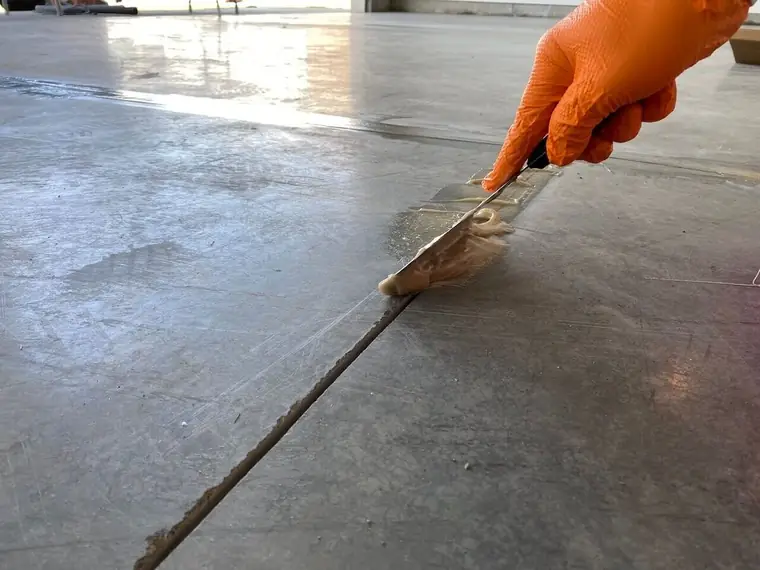
Garage slabs rarely stay perfect. Small shrinkage cracks, control joints, patchy areas, and surface wear are common in Idaho garages. A coating can improve the floor, but it should not be used to hide concrete issues without talking through what they are first.
When cracked concrete can still be coated
Many garage floors with minor, stable cracks can still be suitable candidates for a coating system after proper prep and repair. That usually starts with mechanical surface preparation, cleaning, and deciding which visible areas should be repaired, filled, or left alone so the slab can keep doing its job.
The key is not whether the floor has any crack at all. The key is whether the crack looks cosmetic, whether the edges are sound, and whether the slab shows signs of movement, moisture trouble, or weak surface material. Our concrete prep and repair page explains the groundwork that happens before a finish coat is installed.
When repair should come first
If the crack is widening, offset, crumbling at the edges, or part of a larger surface failure, repair planning matters more than color choice. Pitted or broken-down areas need the same kind of honest review; our guide to repairing pitted concrete before coating explains what installers look for. Some joints are designed to remain visible because they help the slab manage movement. Filling everything the same way can create a cleaner look at first, but it is not always the right long-term approach.
That is why prep-first contractors talk about slab condition early. The floor may need grinding, crack review, edge cleanup, or a different coating plan before the final build goes down. You can see how prep affects long-term performance on our why our floors last page.
What Treasure Valley homeowners should ask before choosing a system
Older garages around the Treasure Valley often deal with dusting concrete, winter road grime, summer heat, and daily vehicle traffic. Those conditions make honest slab evaluation more important than a simple one-size-fits-all quote.
Before you choose a finish, ask how the floor will be profiled, how visible cracks and joints are handled, and what happens if weak concrete is found during prep. If you are comparing system types too, our epoxy vs. polyaspartic guide can help frame that conversation.
What a realistic finished floor looks like
A coated garage floor can look dramatically cleaner than bare concrete, but no honest installer should promise that every old crack disappears forever. Some repaired areas may still be faintly visible, and some working joints may stay part of the finished layout on purpose.
That is not a defect. It is part of matching the coating system to the slab you actually have. Reviewing completed projects in the gallery, checking the garage floor coatings page, and using the estimate calculator can help you decide which level of finish best fits your project.
Have a garage slab with cracks or joint lines?
Epoxy Pros can review the floor condition, talk through realistic finish expectations, and recommend a coating plan that fits the slab.
Get a Free Quote