

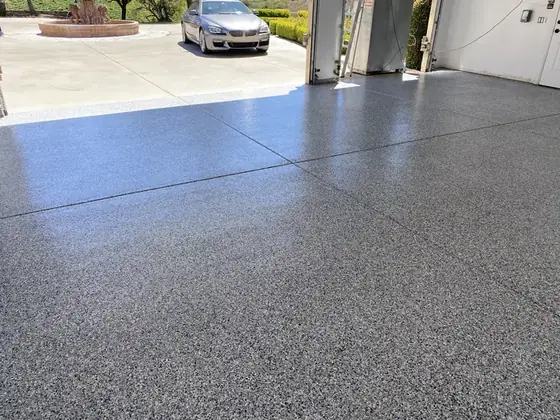
Both directions can look sharp when the slab is prepared correctly. The better choice usually comes down to how much visual texture you want, how forgiving you need the floor to be, and whether the garage is a workhorse space or a more controlled finished room.
Quick answer: which finish makes more sense?
For an active garage where cars, tools, storage, and Idaho road dust are part of daily life, a full-flake finish is usually the more forgiving choice. A solid-color finish can make more sense when you want a quieter, more uniform look and the space stays relatively clean.
What people usually mean by full flake versus solid color
A full flake floor uses decorative chips broadcast across the surface so the finished floor has texture, variation, and a more finished garage look. A solid-color floor keeps the appearance more uniform, with less pattern and less visual movement.
Neither option fixes poor concrete on its own. Surface preparation still matters first, especially when the slab has cracks, old coatings, or weak surface areas. That is why the discussion should stay tied to concrete prep and repairs, not just the final color sample.
Why full flake is often the safer everyday garage choice
For many Treasure Valley garages, full flake is easier to live with because the pattern helps disguise light dust, dried road grime, and the small marks that come from normal parking and storage. Idaho garages rarely stay spotless for long, especially in seasons when dirt, sand, and moisture come in under tires.
That forgiving look is one reason full flake finishes show up so often in the gallery, on the sample page, and across the garage floor coatings section. The floor still looks intentional even when the garage is being used like a garage.
When a solid-color look can make more sense
A cleaner solid-color appearance can be well suited when the goal is a simpler, more minimal visual. Some homeowners prefer less pattern because they want the floor to sit quietly under cabinets, tools, or a more modern garage layout.
That direction can also be well suited to spaces that stay cleaner overall, such as a hobby room, a lower-traffic storage garage, or an area that is being designed to feel more finished than rugged. The tradeoff is that uniform surfaces usually show dust, debris, and small visual interruptions more quickly than a flake blend.
Think about maintenance and visibility, not just style
If you do not want every bit of everyday debris to stand out, flake usually gives you more breathing room. If you value a simpler look and accept that normal garage mess may be more visible, a solid-color direction may still feel right.
This is similar to the decision between lighter and darker flake floors: the best-looking choice on day one is not always the easiest floor to live with month after month. Looking at how the garage actually functions is usually more useful than chasing the cleanest sample chip.
How to make the decision before asking for a quote
Start by deciding whether you want the floor to hide normal use or emphasize a cleaner, more uniform design. Then gather a few garage photos, note whether the space is mostly parking and storage or more controlled and finished, and compare a couple of favorites from the sample library.
If the concrete has visible repairs, control joints, or older surface issues, include those in the conversation too. The why floors last page and the garage floor FAQ help frame the practical questions that matter before a finish gets selected.
Need help choosing a more forgiving or more minimal finish?
Send garage photos, your city, and a few finish examples so Epoxy Pros can help you compare a full flake floor against a cleaner solid-color direction.
Start Your Estimate