

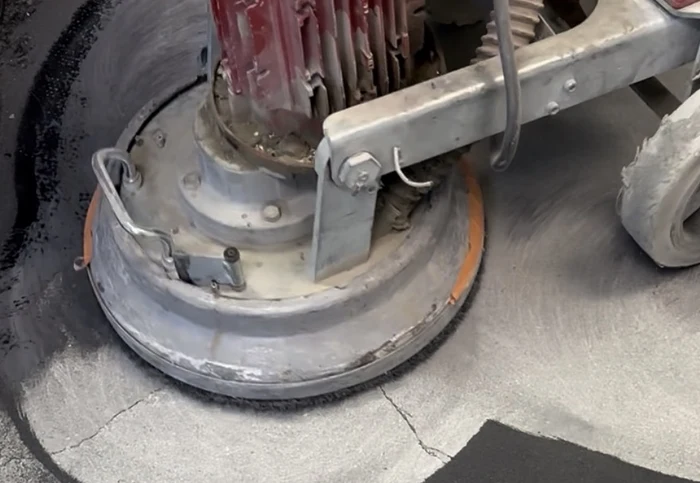
Many garage floors have some history already. That may be old paint near the door, a clear sealer from years ago, a patched area, or a surface that nobody can identify with confidence. The important point is that a new coating system still has to bond to sound concrete, not just to whatever happens to be sitting on top of it.
Why old paint or sealer changes the conversation
Concrete coatings are not meant to cover unknown weak layers and hope for the best. If the slab has old paint, sealer, or previous coating residue, the prep plan needs to account for that before the finish system is selected. Otherwise the new floor may end up depending on a surface that is already failing.
That is why the process explanation on why our floors last and the service details on concrete prep and repairs both start with surface condition first, not color or gloss.
Why coating over unknown layers can be risky
Old paint and old sealer do not always fail in obvious ways. Some areas may look fine but still have weak bond, contamination, or a smooth surface that interferes with the next coating system. Garages around the Treasure Valley also see dust, road grime, hot tires, and seasonal temperature swings, so hidden prep problems tend to show up later under daily vehicle and foot traffic.
If a floor has already seen peeling, flaking, or uneven wear, that is a strong sign to talk about prep scope instead of assuming a new top layer will solve it. Read more about why garage floor coatings peel, then see how the same prep-first logic applies in our article on why diamond grinding matters.
What a prep review usually looks for
A prep review looks at whether the existing surface material is sound, how much is still bonded, whether there are stains or contaminants, and whether cracks, pitting, or edge damage also need attention. In many garages, the right answer depends on the actual slab condition, not on a blanket rule.
If the floor also has cracking or broken areas, compare that with our guide on coating cracked concrete. Old surface layers and concrete repair issues often show up together, but they are not the same question.
Why a professional coating system is not the same as repainting
Homeowners sometimes use "paint" as a general term for any garage floor finish. A professionally prepared epoxy or polyaspartic system is different because it depends on mechanical prep, concrete evaluation, and a coating plan matched to the slab. It is not just another layer rolled over whatever was there before.
You can compare system types on the epoxy and polyaspartic floors page and see finished examples in the gallery and project pages. That gives a clearer picture of what a true coating installation is trying to achieve.
What to share before you request a quote
If you think your garage floor has old paint, sealer, or a previous coating, mention that early and send a few photos of the entire slab plus any peeling or patchy spots. That helps the estimate conversation stay grounded in the existing floor condition instead of assumptions.
You can start on the estimate calculator, review finish options on the garage floor coatings page, and use the FAQ to prepare better prep questions before requesting a quote.
Need help figuring out what is already on your concrete?
Send photos of the floor, especially any peeling, glossy, or patchy areas, so Epoxy Pros can help you plan the right next step.
Get a Free Quote