

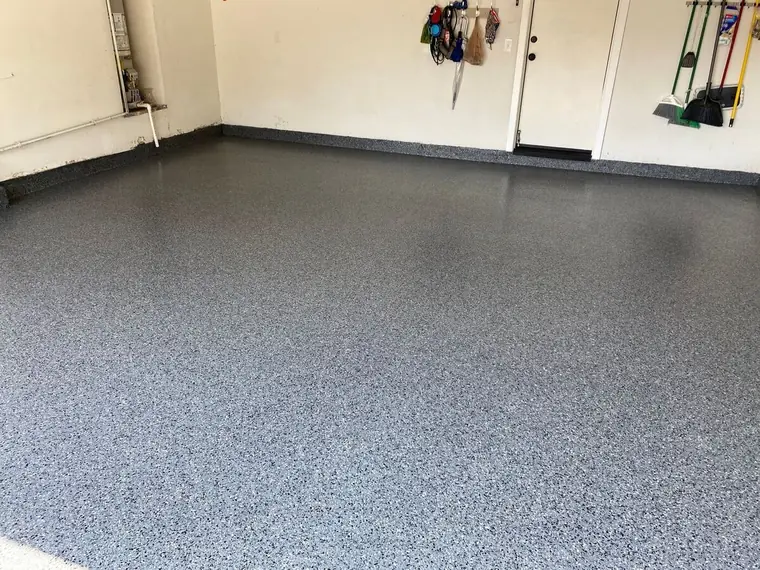
The right way to think about slip resistance is not just whether the floor is coated. It is whether the coating system was planned around real garage conditions like wet shoes, road grime, snow melt, routine cleaning, and the kind of texture the finished floor should have. A clean, glossy-looking photo does not tell the whole traction story by itself.
Texture matters more than the label on the bucket
Garage floor traction depends on the full system, not a single marketing term. The flake broadcast, surface texture, and topcoat selection all affect how the finished floor feels underfoot. That is the same prep-first approach described on why our floors last, where finish planning is tied to traction, gloss, cleaning, and daily use together.
If you are comparing finishes, our decorative flake systems page is useful because it shows why many homeowners choose a flake surface instead of chasing the smoothest possible look.
Why decorative flake floors often make more sense in garages
A decorative flake floor adds visual texture and can create a more practical garage finish than a very plain, smooth-looking surface. That does not mean every flake floor feels the same, but it does mean the finished profile can be planned more intentionally than a bare-looking coating with little surface character.
Treasure Valley garages deal with dust, grit, tire residue, and seasonal moisture, so many homeowners prefer a finish that balances cleanability with traction instead of focusing only on gloss. You can compare examples on the gallery and browse blend options on the samples page.
Wet conditions change the conversation
Any hard floor can feel different when water, snow melt, or tracked-in grime are present. That is one reason Idaho garage conditions matter. The broader context on resources and the local planning notes in our Idaho weather article both point back to the same idea: a realistic coating discussion should include how the garage is used throughout the year, not just how it looks on installation day.
If you know the garage sees wet tires, frequent washing, or a lot of foot traffic between the house and driveway, bring that up during the estimate instead of assuming every finish performs the same way.
Questions worth asking before you choose a finish
A better question than "Is it slippery?" is "How will the finish be planned for traction and cleanup in my garage?" That gives the contractor room to explain flake selection, sheen expectations, and whether a different finish direction may make more sense for the space.
It also helps to ask how the system relates to the rest of the project. If the slab has cracks, pitting, old paint, or other prep issues, those conditions should be addressed first. Our articles on pitted concrete, old paint or sealer, and why coatings peel explain why the substrate conversation still comes first.
How to choose a practical finish for your garage
Think about who uses the space, how often people walk through it, whether the garage doubles as a shop or storage room, and how much day-to-day mess gets tracked across the floor. A finish that looks dramatic in a photo may not be the best match for a busy family garage, while a more forgiving flake system may fit daily use better.
The garage floor coatings page, FAQ, and estimate calculator are the best places to organize those questions before requesting a quote.
Need help choosing a garage floor finish that feels practical?
Send your city, a few photos, and notes about how the garage is used so Epoxy Pros can help you compare traction, texture, and finish options.
Get a Free Quote