

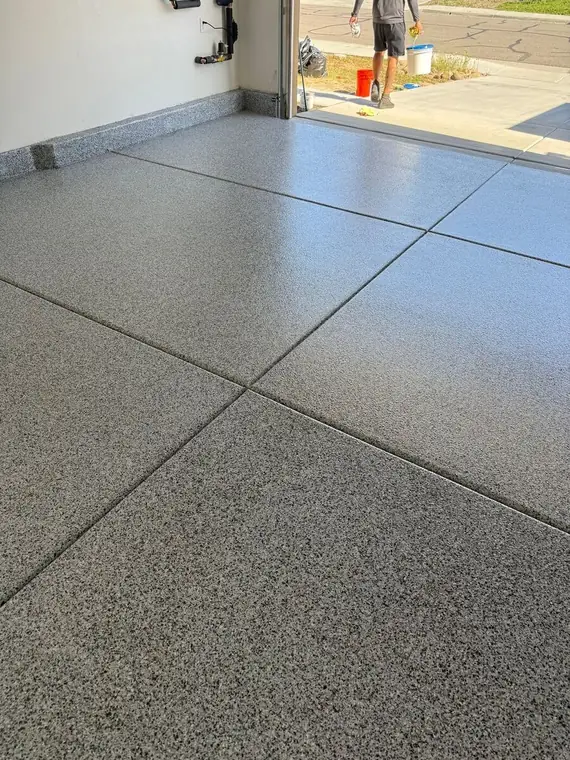
Control joints are not random cracks. They are cut or formed into the slab so the concrete can relieve stress in a controlled place. That is why the question is not just whether a joint can be filled. The important question is how that joint should be handled for the slab you have and the finish you expect.
What control joints do in a garage slab
Concrete moves. It shrinks as it cures, reacts to temperature swings, and can show wear over time. Control joints help guide that movement. In many garages, they are a normal part of the floor layout, not automatically a defect that needs to disappear.
That is also why prep planning matters. The review on concrete prep and repairs and the broader process explanation on why our floors last both point to the same issue: surface preparation and slab condition come before finish details.
Why some joints may stay visible after coating
Some homeowners want the cleanest possible look and assume every line should be hidden. In practice, some control joints are intentionally left as part of the finished floor because they are still doing their job. Filling every joint the same way can create a smoother appearance at first, but it is not always the best long-term choice if the slab continues to move.
That does not mean a coated floor has to look unfinished. Decorative flake systems and clean topcoats can still give the garage a dramatic upgrade even when certain joint lines remain part of the layout. You can see realistic examples in the gallery and on the control joint repair project page.
When Filling a Joint May Be Appropriate
Some joints or damaged areas may be reviewed for repair or filling when the goal is a different appearance, when the edges are breaking down, or when the specific floor condition supports that approach. That decision should be tied to prep, repair materials, and finish expectations, not to a blanket promise made before the slab is inspected.
If the floor also has cracks, surface damage, or old coating failure, it helps to compare this question with our article on coating cracked concrete. Joints and cracks are related topics, but they are not always treated the same way.
What to ask before you choose a coating system
Before you request a quote, ask how visible joints will be handled, whether any areas are candidates for repair, and how the prep plan changes if weak or damaged concrete is found. Those questions are more useful than focusing only on color or gloss.
You can compare finish types on the garage floor coatings page, look through flake samples, and start planning on the estimate calculator. That gives you a better basis for discussing what a realistic finished floor should look like in your garage.
The best result is a realistic one
A quality coating job should make the floor cleaner, easier to maintain, and far more finished than bare concrete. It should also set honest expectations. Some garages can support more joint repair than others, and some floors look better over time when those control lines are respected rather than forced into a one-size-fits-all cosmetic fix.
The most productive estimate conversation is the one that starts with the slab you actually have. That is the clearest way to match the coating system, prep scope, and finished appearance to daily garage use in the Treasure Valley.
Want help deciding how your garage joints should be handled?
Send a few photos of the slab and the joint layout so Epoxy Pros can talk through prep, repair options, and realistic finish expectations.
Get a Free Quote