

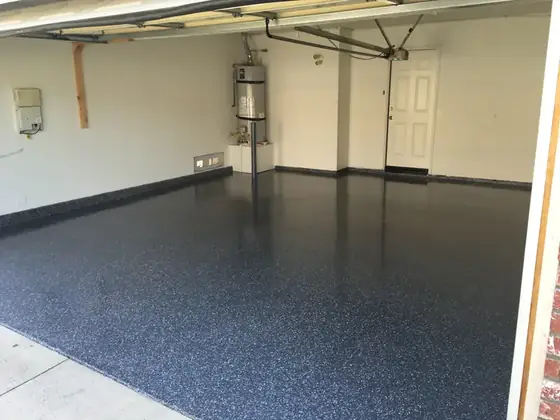
Clearing the garage is less about making the job look tidy and more about giving prep work room to happen correctly. Surface preparation, repair review, and coating application all depend on access to the slab. If boxes, freezers, workbenches, or stacked storage stay in the way, the conversation quickly becomes less about the right coating system and more about what parts of the floor can realistically be reached.
Full access helps prep stay consistent
Garage floor coatings depend on what happens before the finish goes down. If the slab needs grinding, crack review, joint work, or stain evaluation, the crew needs room to see and prep the whole floor instead of working around permanent obstacles. That is why our concrete prep and repairs page and the prep standards described on why our floors last matter so much.
If the garage is only partially cleared, some areas may still be easy to coat, but the homeowner should talk through those limits ahead of time instead of assuming the whole slab can be handled the same way.
What usually needs to be moved
Vehicles, loose shelving, storage bins, tools, floor mats, and anything sitting directly on the slab should usually be removed before coating day. Wall-mounted cabinets are a different conversation than items resting on the floor, but the goal is the same: clear access to the concrete so prep and finish work are not interrupted.
If your garage has heavy storage, old paint, oil stains, or damaged concrete near parked vehicles, it also helps to review our posts on oil-stained concrete, old paint or sealer, and pitted concrete before coating.
Built-ins and very heavy items should be discussed before the quote
Not every garage has an empty-box layout. Some have refrigerators, built-in benches, water equipment, or storage that is difficult to move. Those conditions do not automatically stop a project, but they should be part of the estimate conversation. Homeowners usually get better answers when they send photos and explain what will stay in place rather than waiting until install day.
The estimate conversation is also a good time to compare whether a finish from our garage floor coatings page or our broader epoxy and polyaspartic floors overview makes the most sense once access and slab condition are understood.
Treasure Valley garages often store more than cars
Across the Treasure Valley, many garages double as storage rooms, hobby spaces, home gyms, or workshop areas. That is normal, but it means prep planning matters more. Seasonal gear, yard tools, and shelves full of household overflow can turn a straightforward coating project into a staging problem if nobody discusses access early.
If your garage works more like a shop or flex space, it may also help to look at coatings for workshops and commercial-style spaces and browse finished examples in the gallery or project pages before requesting a quote.
How to make prep day easier
Start by deciding what can be fully removed, what may need temporary relocation, and what is staying in place. Then take a few wide photos of the full garage plus close shots of anything large or hard to move. That gives the estimate conversation more practical context than asking a generic question about square footage alone.
You can use the estimate calculator to start the conversation, review common logistics on the FAQ, and compare finished systems on the samples page before scheduling your next step.
Need help planning around garage storage before coating?
Send a few photos of the full garage and any heavy items that may stay in place so Epoxy Pros can help you plan the cleanest next step.
Get a Free Quote